Italy is the world's largest wine producer, with over 500 officially recognized grape varieties grown across 20 regions, from the Alps to Sicily. If that sounds overwhelming, you're right — Italian wine is complex. But that complexity is also its magic. No other country offers this depth of diversity, history, and terroir. Here's your guide to getting started.
Understanding Italian Wine Labels
Italian wines are classified in a quality hierarchy:
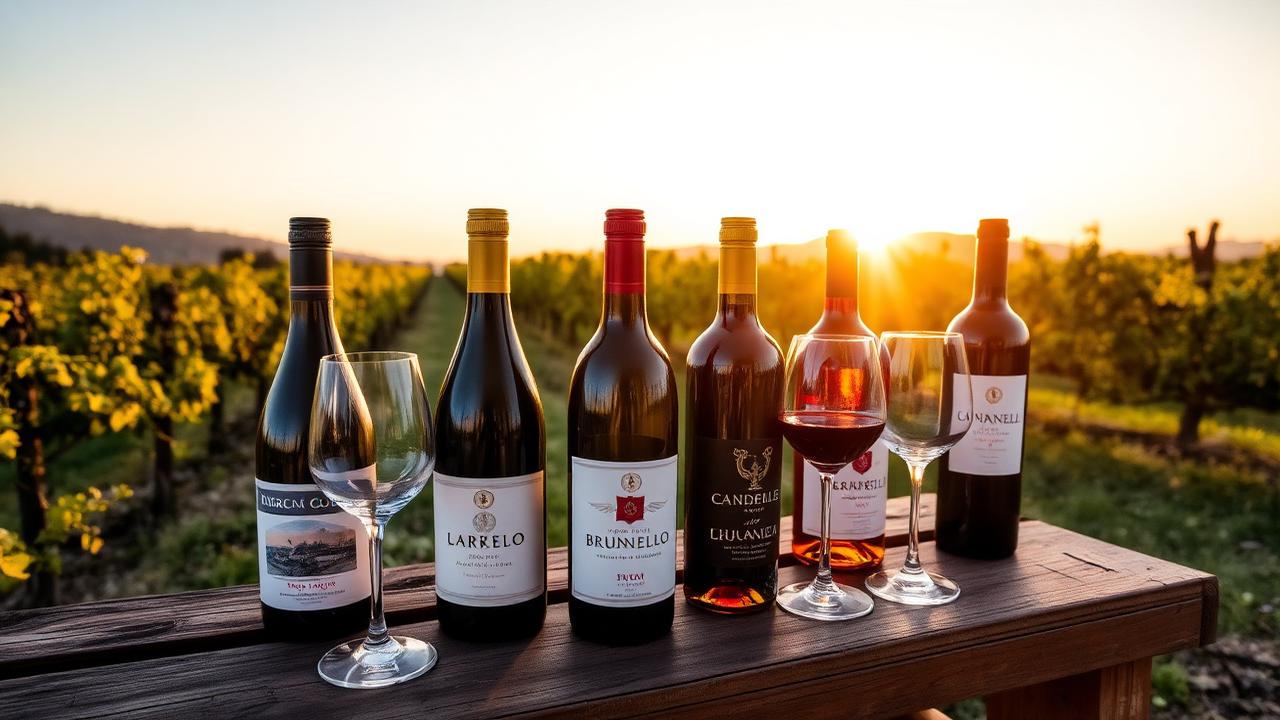
- DOCG (Denominazione di Origine Controllata e Garantita): The highest classification. Wines must meet strict production rules and pass a tasting panel. Examples: Brunello di Montalcino, Barolo, Chianti Classico.
- DOC (Denominazione di Origine Controllata): Similar rules to DOCG but slightly less stringent. Example: Rosso di Montalcino.
- IGT (Indicazione Geografica Tipica): More flexible rules, allowing producers to experiment. This is where you find the famous "Super Tuscans" like Sassicaia.
- Vino: Table wine with no geographic restriction.
Important: Higher classification doesn't always mean better wine. Some of Italy's finest (and most expensive) wines are classified as IGT because their producers chose to use grapes or methods outside DOC/DOCG rules.
The Essential Red Wines
Chianti Classico (Tuscany)
Made primarily from Sangiovese. Medium-bodied with cherry, earth, and herb notes. The most versatile Italian red — perfect with pasta, pizza, grilled meats, and aged cheeses.
Brunello di Montalcino (Tuscany)
100% Sangiovese, aged 5+ years. Complex, powerful, and age-worthy. A special-occasion wine that rewards patience.
Barolo (Piedmont)
Made from Nebbiolo. Often called "the king of wines and the wine of kings." Tar, roses, cherries, and extraordinary complexity. Needs 10+ years to fully develop.
Amarone della Valpolicella (Veneto)
Made from partially dried grapes, creating intense, raisin-rich flavors with high alcohol. A bold, winter wine.
Montepulciano d'Abruzzo (Abruzzo)
Not to be confused with Vino Nobile di Montepulciano (which uses Sangiovese from the town of Montepulciano). This is a grape variety producing smooth, fruity reds at excellent prices.
The Essential White Wines
Pinot Grigio (Trentino-Alto Adige)
Italy's most exported white. At its best (from the north), it's crisp, mineral, and refreshing — far from the bland versions often found abroad.
Vermentino (Sardinia/Liguria)
Coastal, bright, and saline — the perfect seafood wine.
Gavi (Piedmont)
Made from Cortese grapes. Elegant, citrusy, and underappreciated outside Italy.
The Essential Sparkling
Prosecco (Veneto)
Italy's answer to Champagne — lighter, fruitier, and more affordable. The best comes from the Valdobbiadene DOCG zone.
Franciacorta (Lombardy)
Made using the same method as Champagne, Franciacorta is Italy's most refined sparkling wine. Elegant, complex, and still relatively unknown outside Italy — making it excellent value compared to Champagne.
Wine Tasting Tips
- Start with what you know: If you like Pinot Noir, try Nebbiolo. If you like Merlot, try Sangiovese.
- Ask for recommendations: Italian sommeliers and wine shop owners love sharing their knowledge. A simple "Cosa mi consiglia?" (What do you recommend?) opens doors.
- Buy at the source: Wine at the cellar door costs 30–50% less than in shops or restaurants.
- Ship home: Many wineries can arrange international shipping, or use a consolidation service.